Smart access systems are changing how organizations protect people, spaces, and sensitive assets. They combine mobile credentials, cloud dashboards, biometric options, visitor management, and real-time entry records. But adoption differs widely across industries. So, what industries use smart access systems the most? The answer usually includes commercial offices, healthcare, education, hospitality, logistics, manufacturing, and residential property management.
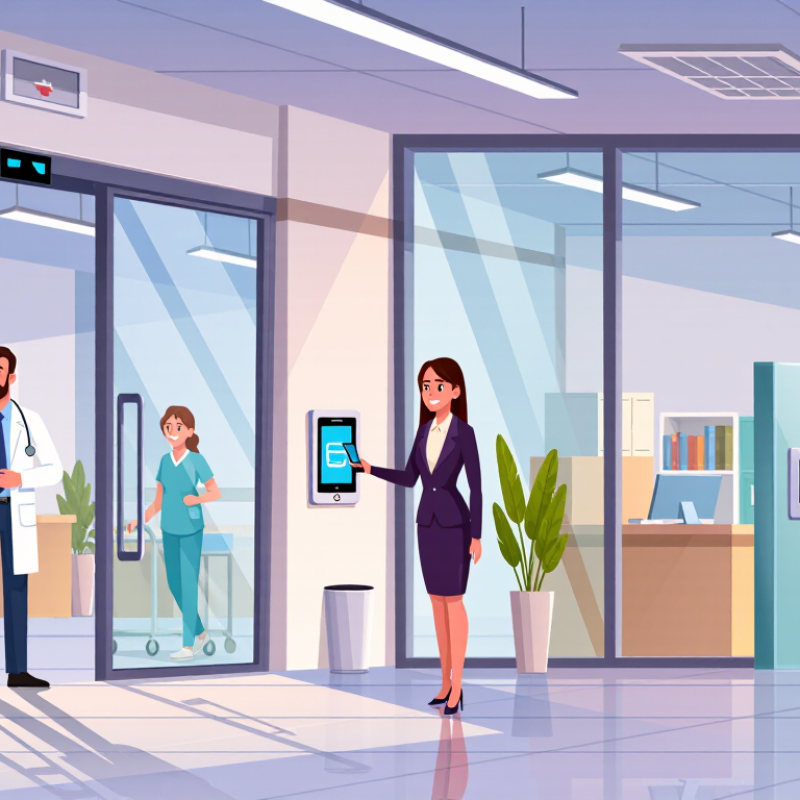
Commercial offices often use smartphone badges at glass entrances and elevator lobbies. Healthcare facilities need controlled movement between patient rooms, pharmacies, laboratories, and staff-only areas. Schools and universities use these systems to manage classrooms, dormitories, libraries, and sports buildings. In hotels, digital access can connect room entry with reservations and housekeeping schedules. Logistics centers and manufacturers also benefit from access zones around loading bays, machinery, and inventory rooms.
Security technology executive Steve Van Till has described this transition clearly: “Access is becoming a software problem, not only a hardware problem.” His point matters because modern access control must connect with identity systems, cameras, alarms, and workplace software. Strong systems also create useful records without forcing employees to carry physical keys.
The picture is not perfect. Poor network coverage, unclear permissions, and weak user training can reduce reliability. A smart lock is not automatically a smart security strategy. Each industry must balance convenience, privacy, emergency access, and maintenance. The best solution is rarely the most expensive one. It is the system that fits daily routines, protects vulnerable areas, and remains understandable when something goes wrong.
How to Compare Smart Access: Security, Scale, Integration, and ROI
Hospitals, warehouses, offices, and schools increasingly use smart access systems to manage busy entry points. Their needs differ, so comparison should begin with real operating conditions. A hospital may need rapid access during emergencies, while a warehouse may prioritize shift-based permissions and delivery records. Security is more than a locked door. Check encryption, multi-factor authentication, tamper alerts, visitor controls, and detailed entry logs. Ask how the system handles lost credentials. Test the backup process.
Scale matters when one site becomes five.
The system should support new doors, users, schedules, and locations without creating administrative confusion. A clear dashboard helps, but practical testing reveals more. Try creating a temporary contractor profile, changing access zones, and removing it immediately. Slow updates can create unnecessary exposure. They can also frustrate staff.
Integration affects daily value. Confirm whether the system can connect with existing cameras, alarms, identity directories, and building management tools through secure interfaces. Poor integration may force teams to enter the same data twice. That cost is easy to miss. ROI should include hardware, installation, training, maintenance, support, and occasional replacement costs. Compare these expenses with reduced key management, faster onboarding, fewer manual checks, and better incident investigation. Early estimates are often optimistic. Measure actual door usage and administrative hours for several months before judging performance.
Healthcare: 725 U.S. Breaches in 2023 Raise Access-Control Stakes (HHS)
Healthcare facilities face a sharper access-control challenge than many other industries. The U.S. Department of Health and Human Services reported 725 large healthcare breaches in 2023. That figure raises an uncomfortable question: who can enter sensitive areas, and when?
Smart access systems can connect staff identities with specific doors, cabinets, and schedules. A nurse may enter medication storage during assigned hours, while a contractor receives temporary access to a maintenance zone. Multifactor authentication, detailed audit trails, and instant credential removal can reduce exposure after staffing changes. These tools support HIPAA-oriented security practices, but they do not replace staff training or careful supervision. Technology can fail. People can also share access codes, sometimes without noticing the risk.
Tips: Start with a room-by-room access review. Separate patient areas, records rooms, pharmacies, laboratories, and server spaces. Use the least access necessary for each role. Test emergency procedures regularly, including power loss and network outages. Review access logs for unusual times, repeated denials, or inactive accounts. Keep backup procedures practical, not merely documented. A perfect system is unlikely. The goal is measurable control, quick detection, and honest improvement.
Commercial Buildings: 30% of Global Energy Use Comes from Buildings (IEA)
What Industries Use the Best Smart Access Systems?
Commercial Buildings: 30% of Global Energy Use Comes from Buildings (IEA)
The IEA reports that buildings consume about 30% of global energy. Commercial properties therefore need more than secure doors. Smart access systems can connect entry permissions with lighting, heating, ventilation, and occupancy data. An empty meeting room should not remain fully powered for hours. That small detail matters across office towers, hospitals, schools, hotels, and retail spaces.
In practice, facility teams can use access records to understand movement patterns without relying on guesswork. Occupancy information may support better cleaning schedules, safer emergency planning, and more efficient energy control. However, access data must be handled carefully. Privacy, clear permission rules, and regular system audits build trust. The technology is not magic. A poorly planned installation can create unnecessary costs and frustrated employees.
Tips: Start with one building zone, such as meeting rooms or staff entrances. Measure energy use before and after installation. Review access permissions every quarter. Keep manual controls available for emergencies and system failures. Train security and facilities teams together. Small pilots reveal practical problems early. Yet even good pilots need honest review, because energy savings may vary with weather, building design, and occupant behavior.
What Industries Use the Best Smart Access Systems?
Commercial and public buildings are a major target for smart access systems because building operations account for approximately 30% of global final energy demand.
The chart shows the estimated share of global final energy demand associated with residential and commercial/public buildings. Values are derived from the IEA estimate that buildings use about 30% of global final energy, with residential buildings representing roughly 70% of building energy use and non-residential buildings about 30%.
Education: 49.4M Public-School Students Need Scalable Entry (NCES)
What Industries Use the Best Smart Access Systems?
Education: 49.4M Public-School Students Need Scalable Entry (NCES)
Education faces a unique access challenge. The National Center for Education Statistics reports roughly 49.4 million students attend U.S. public schools. Every morning, they arrive through crowded doors, narrow time windows, and changing supervision plans. A scalable access system must support students, teachers, contractors, and visitors without creating long queues.
The NCES School Survey on Crime and Safety found that about 97% of public schools controlled access to buildings during school hours. However, control does not always mean smooth control. Schools may still rely on outdated keys, manual visitor logs, or unclear emergency procedures. The Cybersecurity and Infrastructure Security Agency recommends layered protection, including controlled entry, visitor management, and emergency communication. These measures should connect with daily staff routines, not sit unused in a security office.
Tips: Begin with a door-by-door access review. Identify high-traffic entrances, delivery points, and areas used after school. Use role-based permissions, temporary visitor credentials, and clear reporting procedures. Test emergency workflows with staff, then revise them. No system is perfect. A pilot may reveal problems that planning misses. District leaders should also measure entry time, failed credentials, and support requests before expanding deployment.
Hospitality and Warehousing: 1.3B Tourists and $1.19T E-Commerce (UN Tourism/Census)
Hospitality and warehousing are leading users of smart access systems. UN Tourism’s World Tourism Barometer reported about 1.3 billion international tourist arrivals in 2023. Hotels therefore manage constant movement through rooms, elevators, staff areas, and storage spaces. Smart locks, time-limited credentials, and access logs can reduce front-desk delays. They also help investigate misplaced keys or unusual entry times. One weak battery can still stop a guest at midnight.
Warehousing faces similar pressure from online demand. Census Bureau data cited in the benchmark places e-commerce near $1.19 trillion. Distribution sites need controlled access across loading docks, inventory cages, offices, and temperature-sensitive areas. A modern system can connect permissions with shift schedules and visitor records. It should also preserve offline operation when a network fails. NIST Cybersecurity Framework 2.0 supports identity management, monitoring, and recovery planning. However, access technology alone cannot correct poor employee training or unclear permissions.
Tips: Start with a risk map, not a device list. Separate guest, worker, contractor, and emergency access. Review permissions every quarter. Test backup power and offline credentials during quiet hours. Keep audit logs protected and readable. Choose systems that support privacy laws in every operating region. A perfect deployment is unlikely, so document failures and improve the next version.
What Industries Use the Best Smart Access Systems? — Hospitality and Warehousing: 1.3B Tourists and $1.19T E-Commerce
| Industry |
Verified Market Context |
High-Value Access Points |
Recommended Credential Types |
Essential System Capabilities |
Operational Data to Track |
Primary Business Value |
| Hospitality |
International tourist arrivals reached approximately
1.3 billion in 2023, creating high demand for flexible, multilingual and low-contact guest access.
|
Guest rooms, serviced apartments, fitness areas, conference rooms, staff entrances, parking areas and luggage-storage rooms.
|
Time-limited mobile credentials, PIN codes, contactless cards, staff credentials and remotely issued visitor passes.
|
Remote provisioning and revocation; scheduled validity periods; integration with reservation workflows; occupancy-aware permissions; emergency override; offline access continuity; complete entry and exit audit trails.
|
Credential issue time, failed-entry rate, access attempts by time period, room or zone access history, expired credentials, emergency events and average time to revoke access.
|
Faster guest arrival, reduced physical key handling, simpler staff administration, improved privacy and stronger visibility across guest and employee access.
|
| Warehousing |
U.S. retail e-commerce sales were estimated at
$1.1926 trillion in 2024, increasing the need to protect inventory, loading operations and distribution workflows.
|
Main gates, employee entrances, loading docks, dispatch offices, high-value inventory zones, maintenance areas, cage storage and visitor reception.
|
RFID or NFC credentials, PIN codes for approved contractors, role-based employee badges, temporary visitor passes and vehicle or gate credentials.
|
Role- and zone-based permissions; shift scheduling; anti-passback controls; contractor expiration dates; gate integration; two-person authorization for restricted areas; tamper alerts; offline operation and centralized audit logs.
|
Entry attempts by zone, loading-dock access history, after-hours events, contractor credential status, tailgating alerts, denied-entry reasons, incident response time and access activity by shift.
|
Better inventory protection, fewer unauthorized entries, clearer accountability for dock and restricted-zone activity, and more efficient workforce access management.
|
Conclusion
What industries use smart access systems the most? The answer is found in sectors that manage large numbers of people, valuable assets, and complex facilities. Healthcare organizations need stronger access control as data security and privacy risks increase, while commercial buildings use smart systems to improve safety, monitor entry, and support energy-efficient operations. With buildings responsible for roughly 30% of global energy use, connected access can also contribute to better facility management.
Education is another major user, as millions of public-school students require scalable, reliable entry solutions. Hospitality businesses benefit from flexible access for guests and staff, while warehouses and logistics facilities need controlled movement across large sites to protect inventory and streamline operations. When comparing smart access systems, organizations should evaluate security, scalability, integration with existing tools, ease of management, and long-term return on investment. The best solution is one that matches daily workflows, adapts to future growth, and improves both operational efficiency and user experience.

 KBM Living